Newsflash: Lane County blows up dead whale
The actual QuickTime video has been removed. It's 11MB and has been downloaded so much that it accounted for over 90% of the traffic from our web server. Sorry!
 |
 |
 |
 |
|
|
|
|
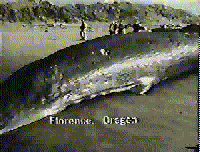
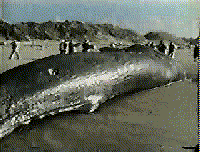
It had to be said, the Oregon State Highway Division not only had a whale of a problem on it's hands, it had a stinking whale of a problem. What to do with one 45-foot, 8-ton whale, dead on arrival, on a beach near Florence? It had been so long since a whale had washed up in Lane County, nobody could remember how to get rid of one.
In selecting it's battle plan, the Highway Division decided the carcas couldn't be burried because it might soon be uncovered, it couldn't be cut up and then burried because nobody wanted to cut it up, and it couldn't be burned, so dynamite it was, some 20 cases or a half-ton of it. The hope was that the long dead pacific grey whale would be almost disintegrated by the blast, and that any small pieces still around after the explosion would be taken care of by seagulls and other scavengers. Indeed the seagulls had been standing nearby all day. As everything was being made ready, we asked George Thornton, the Highway Engineer in charge of the project for his final observations.
"Well, I'm confident that it'll work. The only thing is we're not sure just exactly how much, uh, explosives it'll take to disintegrate this...thing, so the scavengers, seagulls, crabs and what not can clean it up."
"Is there any change it might be more than a one day job"? [Paul Linnman]
"Uh, if there's any large chunks left, and uh, we may have to do some other cleanup, possibly set another charge."
The dynamite was burried primarily on the leeward side of the big mammal so that most of the remains would be blown toward the sea. About 75 bystanders, most of them residents who had first found the whale to be an object of curiosity before they tired of it's smell, were moved back a quarter of a mile away. The sand dunes there were covered with spectators and land-lubber newsmen, shortly to become land-blubber newsmen when the blast blasted blubber beyond all believable bounds.
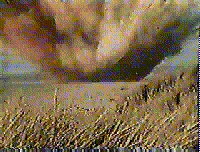
[sounds and video of explosiong followed by falling bits of whale, and the screams of the onlookers as they were pelted with deal whale]
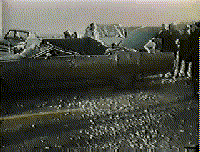
Our cameras stopped rolling immediately after the blast. The humor of the entire situation suddenly gave way to a run for survival as huge chunks of whale blubber fell everywhere. Pieces of meat passed high over our heads while others were falling at our feet. The dunes were rapidly evacuated as spectators escaped both the falling debris and the overwhelming smell. A parked car over a quarter of a mile away from the blast site was the target of one large chunk, the passenger compartment literally smashed. Fortunately no human was hit as badly as the car, however everyone on the scene was covered with small particles of dead whale.
As for the success of the effort, the seagulls who were supposed to clean things up were nowhere in sight, either scared away by the explosion or kept away by the smell. That didn't really matter; the remaining chunks were of such a size that no respectable seagull would attempt to tackle anyway. As darkness began to set in, the highway crews were back on the beach burrying the remains, including a large piece of the carcass which never left the blast site.
It might be concluded that should a whale ever wash ashore in Lane County again, those in charge will not only remember what to do, they'll certainly remember what not to do.